
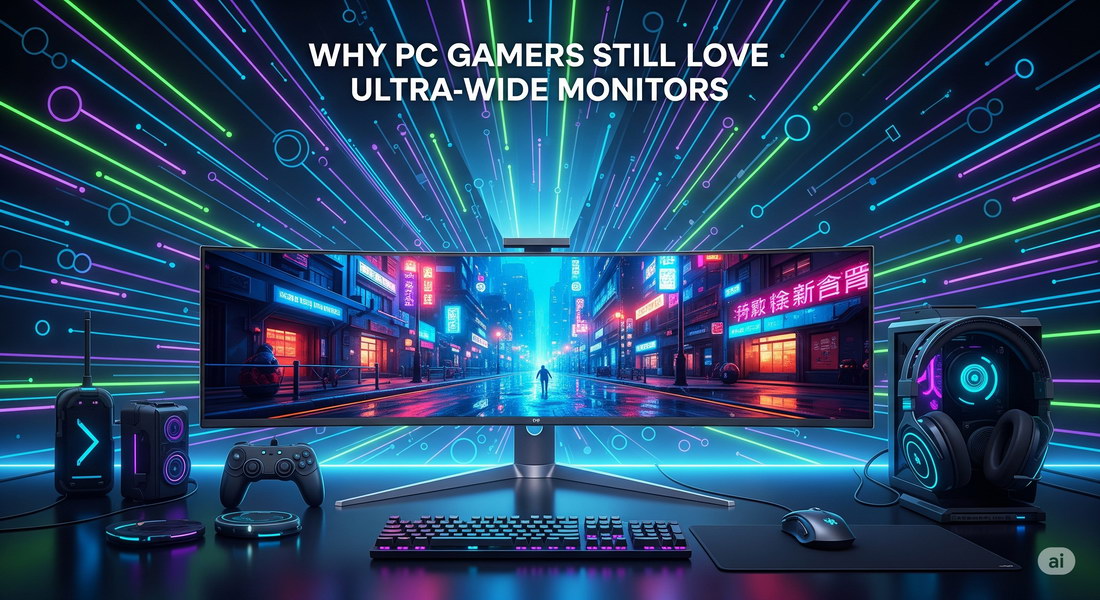
Ultra-wide monitors have become a defining feature of high-end PC setups, offering an immersive experience that standard displays can’t match. Their unique aspect ratios provide more screen real estate, changing not only how games are played but also how work and media are enjoyed. In 2025, ultra-wide monitors remain a favorite among enthusiasts despite competition from VR and multiple monitor setups. The blend of immersion, functionality, and aesthetics keeps them at the center of PC gaming culture.
Ultra-wide monitors enhance immersion in gaming experiences.
The wider field of view offered by ultra-wide monitors makes games feel more cinematic and expansive. Players can see more of their environments at once, adding realism to racing games, flight simulators, and open-world adventures. This extra space draws players deeper into the action, creating a level of immersion that standard 16:9 monitors struggle to match. For many, it transforms gaming into a more engaging and memorable experience.
First-person shooters and competitive games also benefit, as the extended view can improve situational awareness. Spotting enemies earlier or navigating complex maps becomes easier with the broader perspective. Developers increasingly include ultra-wide support, ensuring games run smoothly without distortion or cropping. As immersion continues to be a major goal in gaming, ultra-wide monitors remain one of the most effective tools to achieve it.
Productivity gains make ultra-wide monitors versatile beyond gaming.
While gamers are the primary audience, ultra-wide monitors offer significant benefits for productivity as well. The additional horizontal space allows multiple windows to be open side by side without requiring dual monitors. This setup reduces clutter, cable management issues, and bezels that interrupt the visual flow. For content creators, coders, and multitaskers, ultra-wide monitors streamline workflows in meaningful ways.
Video editors and designers especially appreciate the ability to see full timelines or wide canvases without constant scrolling. Office users enjoy improved efficiency by comparing documents and data across large spaces. These benefits make ultra-wide monitors valuable investments that serve dual purposes. Their ability to blend work and play is part of why they maintain such strong popularity.
Ultra-wide monitors offer aesthetic appeal and setup simplicity.
Compared to dual or triple monitor configurations, ultra-wide displays create a sleek and minimalist setup. The absence of bezels between screens provides a seamless viewing experience that feels more modern. Many ultra-wide models feature elegant designs with slim profiles, enhancing the overall look of gaming desks. For enthusiasts who value aesthetics, this clean setup is often as important as performance.
Setup is also simplified, as a single ultra-wide monitor requires fewer cables and adjustments than multiple displays. Calibration and software settings are easier to manage with just one screen. Gamers no longer have to worry about mismatched panels or uneven bezels. This combination of beauty and simplicity ensures ultra-wide monitors remain appealing for both casual and hardcore users.
Technical advancements continue to improve ultra-wide monitors.
Early ultra-wide monitors often suffered from low refresh rates and limited resolution, but modern models have overcome these issues. Today’s ultra-wide displays offer 144Hz, 240Hz, and even higher refresh rates, catering to competitive gamers. Resolutions like 3440×1440 and 5120×2160 deliver sharp visuals without sacrificing performance on powerful PCs. HDR support and curved designs further enhance image quality and immersion.
Manufacturers are also pushing innovations in response times and color accuracy. This ensures ultra-wide monitors are suitable not just for gaming but also for professional creative work. The variety of panel types, from IPS to OLED, allows players to prioritize what matters most to them. With each generation, the technology becomes more refined, cementing ultra-wide monitors as long-term investments.
Future trends suggest ultra-wide monitors will remain relevant.
As VR and AR technologies evolve, some predict ultra-wide monitors will become less necessary. However, their ease of use, versatility, and lack of motion sickness give them enduring appeal. Unlike headsets, ultra-wide monitors don’t require strapping on extra gear or adjusting to new interfaces. This makes them more practical for daily use, ensuring their continued demand among PC gamers.
Looking ahead, ultra-wide monitors may integrate features like mini-LED backlighting, higher resolutions, and advanced curvature designs. These improvements will make them even more immersive and visually stunning. Combined with ongoing support from game developers, their relevance is unlikely to fade anytime soon. Ultra-wide monitors are not just a trend—they are a lasting part of the PC gaming experience.
PC gamers still love ultra-wide monitors because they combine immersion, productivity, and aesthetics in one package. Their wide aspect ratios bring games to life while also improving everyday workflows. Advancements in refresh rates, resolution, and design ensure they remain competitive with emerging technologies. As gaming and work continue to evolve, ultra-wide monitors will stay a symbol of the PC’s unmatched versatility and performance.


