The Evolution of the PlayStation Controller: From DualShock to DualSense

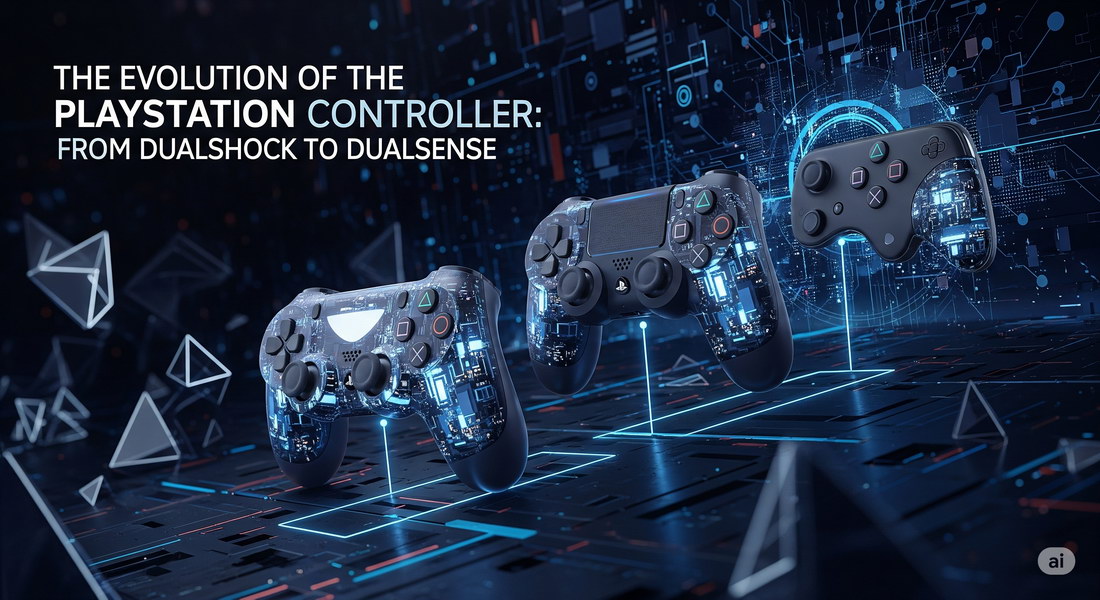
The original DualShock set the foundation for modern controllers.
Released in 1997, the DualShock introduced dual analog sticks and built-in vibration feedback. These features quickly became industry standards, redefining how players interacted with 3D environments. Its symmetrical design was simple yet effective, offering comfort for long gaming sessions. The combination of analog precision and rumble immersion set the stage for future innovations.
The DualShock also showed how hardware could directly impact gameplay. Titles like Ape Escape relied on analog controls in ways that expanded what developers could create. Vibration feedback added tension and excitement, making in-game actions feel more real. The success of the DualShock ensured that PlayStation’s identity would always be tied to controller innovation.
The DualShock 2 refined responsiveness and control.
With the launch of the PlayStation 2 in 2000, Sony released the DualShock 2. It looked similar to its predecessor but introduced analog pressure-sensitive buttons. This allowed developers to design more nuanced controls, such as gradual acceleration in racing games. The added precision helped elevate gameplay across genres.
Although the design wasn’t radically different, the improvements under the hood were significant. The DualShock 2 became one of the most widely used controllers in history thanks to the PS2’s massive popularity. Its durability and comfort made it a staple in households worldwide. It showed that refinement could be just as important as reinvention.
The DualShock 3 embraced wireless play and motion sensing.
In 2006, the PlayStation 3 introduced the DualShock 3, combining familiar design with new technology. The controller featured wireless Bluetooth connectivity, eliminating cords and providing more freedom. Motion-sensing technology through Sixaxis controls added new gameplay possibilities. Vibration feedback also made a return after initial concerns about compatibility.
These features reflected the industry’s shift toward wireless, immersive experiences. While not every game fully utilized motion controls, they showcased Sony’s willingness to experiment. The DualShock 3 maintained the brand’s recognizable design while adapting to modern expectations. It marked a transitional step in the PlayStation controller’s evolution.
The DualShock 4 introduced major design and functionality changes.
The arrival of the PlayStation 4 in 2013 brought the most significant redesign yet. The DualShock 4 featured a touchpad, light bar, and improved analog sticks for greater precision. Its ergonomic grips made it more comfortable than its predecessors, appealing to a wider audience. The addition of a Share button reflected the growing importance of streaming and social play.
The controller’s versatility made it popular even outside the PlayStation ecosystem. Many PC gamers adopted the DualShock 4 thanks to its compatibility and modern features. Developers also used the light bar and touchpad in creative ways, expanding gameplay possibilities. The DualShock 4 proved that innovation could enhance both form and function.
The DualSense redefined immersion with advanced technology.
Launched alongside the PlayStation 5 in 2020, the DualSense set a new benchmark for controller innovation. Adaptive triggers introduced dynamic resistance, simulating sensations like bowstrings tightening or brakes resisting. Advanced haptic feedback provided nuanced vibrations that matched in-game actions with incredible precision. These features elevated immersion beyond what traditional rumble could offer.
The DualSense also improved comfort with a slightly larger, more ergonomic design. The built-in microphone and refined speaker added convenience and immersion. Developers embraced its features to deliver unique gameplay experiences tailored to the controller. The DualSense wasn’t just an evolution—it was a revolution in how players connect with their games.
The evolution of the PlayStation controller highlights Sony’s dedication to balancing familiarity with innovation. From the original DualShock’s groundbreaking features to the DualSense’s next-gen immersion, each generation pushed boundaries in meaningful ways. Controllers are the bridge between player and game, and PlayStation’s designs have consistently shaped that connection. As gaming continues to evolve, the PlayStation controller will remain at the forefront of how we play.


