
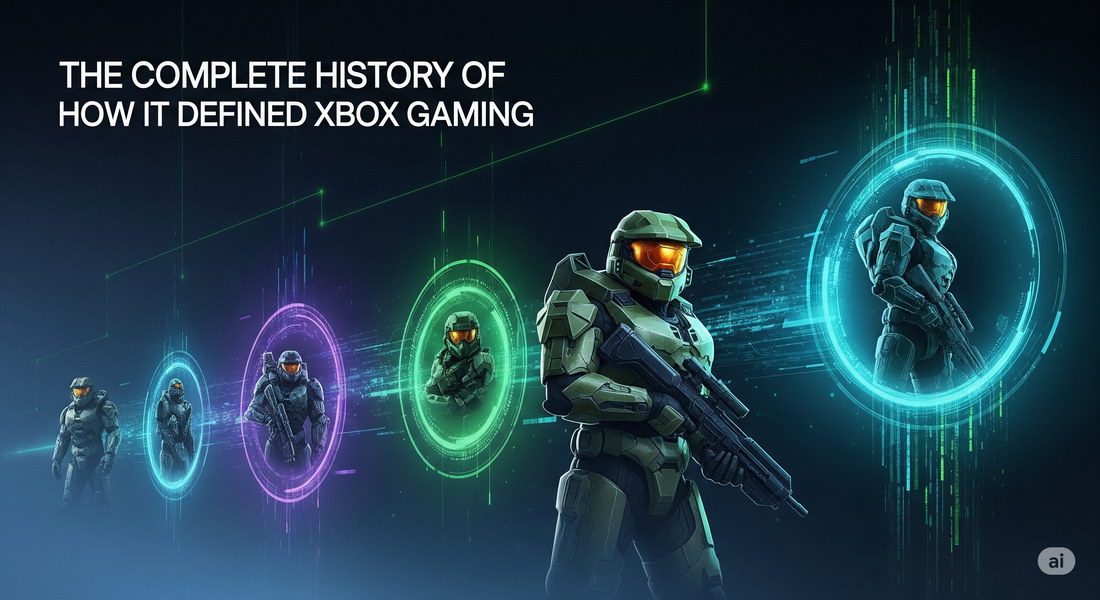
Few franchises have shaped the identity of a gaming platform as profoundly as Halo did for Xbox. From its groundbreaking debut in 2001 to its continued legacy in 2025, the series has been central to Microsoft’s success in the gaming industry. Halo not only defined first-person shooters on consoles but also established Xbox Live as a hub for online gaming. Its history is both a story of innovation and a testament to the passion of its community.
Halo: Combat Evolved launched Xbox into the spotlight.
When the original Xbox launched in 2001, Halo: Combat Evolved was its flagship title. The game combined expansive environments, intelligent enemy AI, and cinematic storytelling to deliver an unforgettable experience. Players were introduced to Master Chief, the Covenant, and the Halo ringworld in a way that felt both epic and intimate. It was immediately clear that Halo was more than just another shooter.
The game also proved that first-person shooters could thrive on consoles, thanks to its intuitive controls and innovative level design. Local split-screen multiplayer and LAN support made it a social phenomenon. The success of Halo gave Xbox the credibility it needed to compete with PlayStation and Nintendo. Without Combat Evolved, Xbox might never have become a major force in gaming.
Halo 2 redefined online multiplayer and Xbox Live.
Released in 2004, Halo 2 expanded everything that made the original great while pioneering online play on consoles. Its matchmaking system and ranked ladders set the standard for competitive gaming. The campaign introduced new perspectives, including the Arbiter, adding depth to the series’ lore. Players spent countless hours battling online, creating a vibrant and dedicated community.
Halo 2 became a cultural phenomenon, driving sales of Xbox Live subscriptions and solidifying Microsoft’s dominance in online gaming. Its maps and game modes influenced countless titles that followed. The infamous cliffhanger ending also left fans eagerly awaiting the next installment. For many, Halo 2 remains one of the greatest console games of all time.
Halo 3 delivered a legendary finale to the original trilogy.
Arriving in 2007 on the Xbox 360, Halo 3 was marketed with the iconic phrase “Finish the Fight.” The game lived up to expectations, offering a grand conclusion to Master Chief’s battle against the Covenant and the Flood. Its campaign balanced epic scale with emotional moments, cementing it as a fan favorite. The inclusion of four-player co-op further enhanced its replayability.
Multiplayer once again stole the spotlight, with Forge mode allowing players to create and share custom maps. This user-generated content kept the game alive long after launch. Halo 3 also became one of the earliest blockbuster titles to dominate gaming culture beyond its core audience. Its impact made it a defining moment not just for Xbox, but for gaming history as a whole.
Halo: Reach and ODST expanded the universe beyond Master Chief.
Halo 3: ODST (2009) and Halo: Reach (2010) gave fans fresh perspectives within the Halo universe. ODST delivered a darker, more atmospheric story set in the ruins of New Mombasa, focusing on vulnerability over power. Reach, meanwhile, told the tragic tale of Noble Team and the fall of humanity’s last line of defense before Combat Evolved. Both games showcased Bungie’s storytelling mastery and willingness to experiment.
Multiplayer in Reach introduced new abilities, modes, and a refined Forge system, keeping the community deeply engaged. These spin-offs proved that the Halo universe could thrive without Master Chief at the center. They also marked the end of Bungie’s era with the franchise, paving the way for 343 Industries. Fans still regard these titles as essential chapters in Halo’s legacy.
343 Industries took over with Halo 4 and Halo 5: Guardians.
In 2012, 343 Industries released Halo 4, beginning a new saga for Master Chief. The game introduced the Forerunners as a central threat and deepened the relationship between Chief and Cortana. Visually stunning, it showcased the power of the Xbox 360 near the end of its life cycle. While divisive, it pushed the series into more emotional storytelling territory.
Halo 5: Guardians (2015) continued the story but faced criticism for sidelining Master Chief in favor of new protagonist Spartan Locke. Its campaign left fans divided, though its multiplayer was praised for fluid movement and balanced mechanics. These entries highlighted the challenges of inheriting such a beloved franchise. Still, they kept Halo at the forefront of Xbox’s identity, even as competition grew stronger.
Halo Infinite brought Master Chief back to center stage.
Launched in 2021, Halo Infinite aimed to recapture the spirit of the original trilogy while modernizing gameplay. Its open-world design gave players more freedom than ever before, blending classic Halo combat with new mechanics like the grappling hook. The campaign reestablished Master Chief as the heart of the franchise, with a more grounded and personal narrative. Despite delays and challenges, Infinite was received as a step in the right direction.
The free-to-play multiplayer introduced seasonal content and cross-platform support, keeping the community engaged. While the live-service model faced criticism for pacing, the core gameplay was widely praised. Infinite demonstrated that Halo could still innovate while honoring its roots. It reaffirmed the franchise’s role as a cornerstone of Xbox gaming.
The legacy of Halo continues to define Xbox gaming today.
Even after two decades, Halo remains synonymous with Xbox. Its influence can be seen in everything from online infrastructure to shooter design. The franchise has expanded into novels, TV shows, and merchandise, becoming a cultural icon beyond gaming. For Microsoft, Halo is more than a series—it is a brand-defining pillar.
As the industry evolves, Halo continues to adapt, ensuring its relevance in a crowded market. Whether through new games, spin-offs, or expanded media, it remains a key part of Xbox’s future. The Master Chief stands not just as a character but as a symbol of the platform itself. The history of Halo is, in many ways, the history of Xbox gaming.
The complete history of Halo shows how one franchise can define an entire platform. From Combat Evolved to Infinite, each entry has left a mark on both fans and the industry. Its innovations in multiplayer, storytelling, and online services shaped modern gaming. As long as Xbox exists, Halo will remain its most iconic and enduring legacy.


