
Simple controls make Nintendo games easy to learn.
One of Nintendo’s greatest strengths is its focus on intuitive controls that anyone can understand. From the NES era to the modern Switch, the company designs games with accessibility in mind. A child can quickly learn how to jump in Super Mario or race in Mario Kart without prior experience. This ease of entry creates immediate enjoyment for new players.
At the same time, these controls often hide deeper mechanics that reward experienced gamers. Skilled players can master advanced maneuvers and strategies, making the games endlessly replayable. This design ensures that both beginners and veterans find value in the same game. Nintendo’s emphasis on simplicity never sacrifices depth.
Universal themes resonate with players of all ages.
Nintendo crafts stories and worlds that are approachable, positive, and imaginative. Franchises like Mario, Zelda, and Kirby focus on adventure, exploration, and friendship rather than violence or realism. These universal themes allow younger players to connect without being overwhelmed. Adults, meanwhile, find nostalgia and charm in the same settings.
The whimsical and colorful designs make Nintendo games instantly inviting. Characters like Pikachu or Yoshi embody joy and friendliness, making them iconic worldwide. By avoiding overly complex narratives or dark tones, Nintendo keeps its games welcoming. This approach ensures that its games remain timeless across generations.
Multiplayer experiences encourage shared fun.
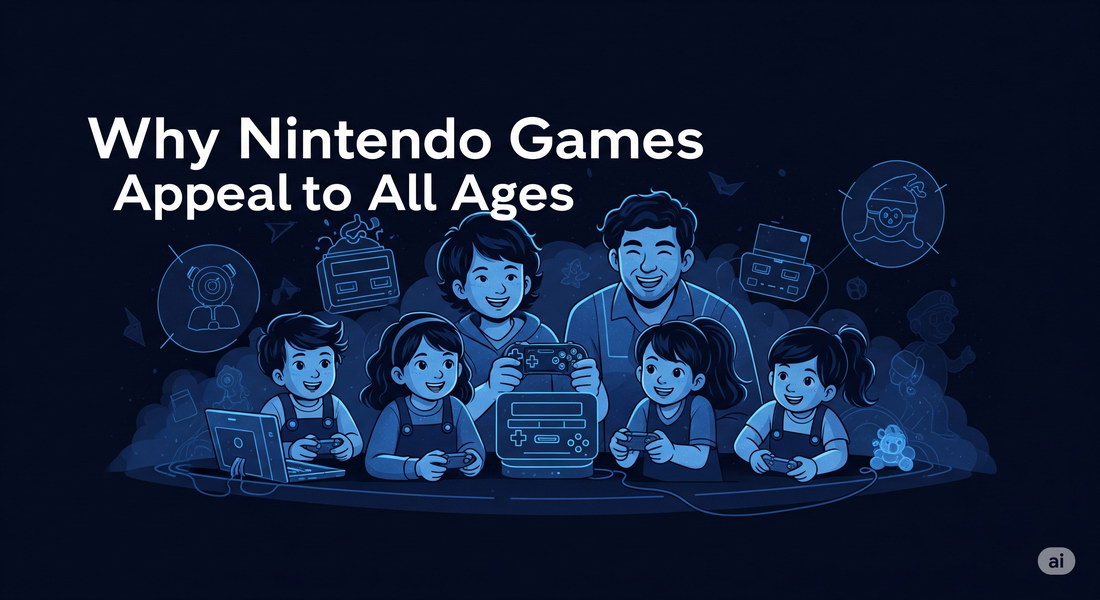
Nintendo has always emphasized the joy of playing together. From four-player sessions on the N64 to party games on the Switch, shared experiences are central to its philosophy. Games like Mario Party and Super Smash Bros. bring families and friends together in laughter and competition. These titles are designed to be enjoyed in social settings, strengthening their universal appeal.
Even single-player experiences often include features that encourage sharing. Handing off a controller, trading Pokémon, or discussing hidden secrets creates community around the games. Nintendo designs with togetherness in mind, ensuring their titles create lasting memories. This social element is a major reason their games appeal to all ages.
Visual simplicity makes games timeless and charming.
Rather than chasing photorealism, Nintendo embraces stylized graphics that age gracefully. The colorful worlds of Wind Waker or Animal Crossing remain beautiful decades later. This visual clarity makes games approachable for all players, regardless of experience. It also avoids alienating younger audiences who might find realism overwhelming.
By focusing on charm rather than technical spectacle, Nintendo ensures its games remain appealing long after release. This design philosophy keeps them accessible even as hardware evolves. Families can return to these games years later and still find them enjoyable. Visual simplicity has become one of Nintendo’s trademarks of success.
Innovative hardware supports accessible gameplay.
Nintendo’s consoles often prioritize accessibility over raw power. The Wii’s motion controls, for example, introduced gaming to millions of new players. The Switch’s hybrid design allows for flexible play at home or on the go. These innovations keep gaming convenient and inclusive for a wide range of players.
By lowering barriers to entry, Nintendo makes gaming a shared experience across demographics. Parents, children, and grandparents can all enjoy the same console without intimidation. The hardware itself reflects Nintendo’s philosophy of simplicity and universality. This synergy between hardware and software reinforces its broad appeal.
Simplicity enhances replayability and long-term engagement.
Nintendo’s design philosophy ensures that games remain fun even after decades. Titles like Super Mario Bros. or Tetris are still widely played because their core mechanics are endlessly enjoyable. The lack of unnecessary complexity means they can be revisited without feeling outdated. This replayability appeals to both nostalgic adults and curious new players.
Modern titles follow the same principle, offering simple mechanics with hidden depth. Mario Kart 8 Deluxe or Super Smash Bros. Ultimate thrive because they are easy to start but challenging to master. This formula keeps players engaged for years instead of weeks. Simplicity ensures Nintendo games remain relevant across generations.
Nintendo’s success lies in its commitment to simplicity, accessibility, and universal fun. By focusing on easy controls, timeless visuals, and social play, it creates experiences that appeal to everyone. Its games bridge generations, uniting families and friends in joyful moments. In a rapidly changing industry, Nintendo proves that the art of simplicity is a recipe for lasting success.


