
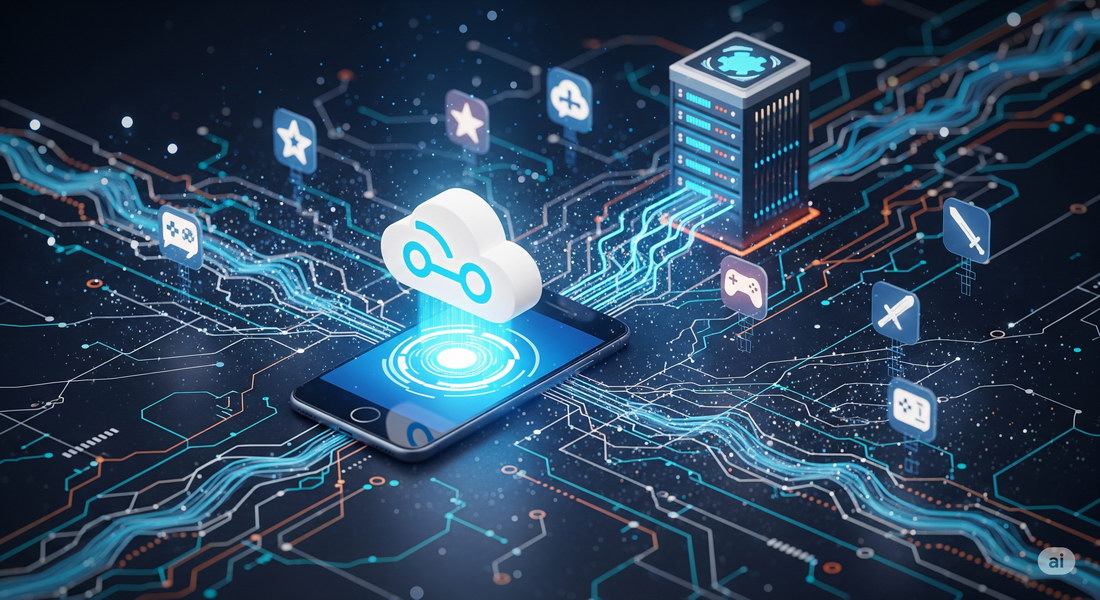
Cloud gaming removes hardware limitations.
One of the biggest challenges in mobile gaming is hardware performance. High-end titles demand powerful processors and GPUs that not all smartphones can handle. Cloud gaming solves this by running games on remote servers and streaming them to the device. This means even budget phones can access graphically demanding titles.
Players no longer need to upgrade devices frequently to enjoy new releases. The reliance on server power ensures consistent performance across a range of hardware. This levels the playing field for gamers worldwide. Cloud gaming effectively democratizes access to premium experiences.
Streaming brings console-quality games to mobile.
Services like Xbox Cloud Gaming, GeForce Now, and PlayStation Remote Play allow smartphones to run blockbuster titles. Players can enjoy console-level graphics and complex gameplay on handheld devices. Touch controls are often integrated, while controllers provide an even better experience. The gap between mobile and traditional gaming continues to shrink.
This accessibility extends gaming beyond the living room. Commuters, students, and casual players can dive into high-quality titles anywhere. Smartphones become all-in-one devices for communication, entertainment, and serious gaming. Cloud streaming redefines what mobile devices are capable of delivering.
Connectivity remains the biggest challenge.
Despite its promise, cloud gaming relies heavily on stable, high-speed internet. Lag, latency, and data caps can disrupt the experience. In regions with weaker infrastructure, cloud gaming struggles to meet expectations. Without reliable connectivity, the technology cannot reach its full potential.
However, the rollout of 5G networks has improved prospects dramatically. Faster speeds and lower latency make mobile streaming far more viable. As connectivity improves globally, cloud gaming adoption will likely accelerate. The future of the technology depends heavily on these advancements.
Cloud gaming supports cross-platform integration.
Another advantage of cloud gaming is seamless cross-platform play. Players can begin a game on console or PC and continue on their smartphones. Saves and progress sync across devices, making gaming more flexible. This integration appeals to players who want uninterrupted experiences.
Cross-platform also fosters larger, more connected communities. Cloud gaming eliminates barriers between devices and ecosystems. It shifts the focus from where you play to what you play. This flexibility makes cloud gaming attractive for developers and gamers alike.
Subscription models drive accessibility and growth.
Cloud gaming services often operate on subscription models, similar to Netflix or Spotify. For a monthly fee, players gain access to large libraries of titles. Xbox Game Pass Ultimate is one of the most notable examples. This model lowers entry costs and encourages experimentation with different games.
Subscriptions also ensure developers and publishers gain recurring revenue. They create sustainable ecosystems that benefit both creators and players. The model aligns with broader trends in digital entertainment. Subscriptions make cloud gaming more appealing to mainstream audiences.
The future of cloud gaming on smartphones looks promising but uncertain.
Cloud gaming has the potential to redefine mobile gaming entirely. It offers high-quality experiences, cross-platform integration, and affordability through subscriptions. Yet challenges like internet reliability and data costs remain significant barriers. Until these are resolved, cloud gaming cannot fully replace traditional mobile gaming.
Still, industry momentum suggests progress will continue rapidly. As infrastructure improves, smartphones could become the primary devices for accessing premium games. Cloud gaming may not be the only future of mobile play, but it will certainly be a major part of it. The coming years will determine how dominant it becomes.
Cloud gaming on smartphones represents both opportunity and challenge. It eliminates hardware limitations, delivers console-quality games, and supports cross-platform play. Subscriptions make it affordable, but internet connectivity remains a hurdle. While not yet the definitive future of mobile gaming, cloud streaming is poised to become one of its most transformative forces.


